نزدیکا
- 3.8
- Rating
- 500.00K
- Installs
- Free
- Price

 Analysis by App-foxy
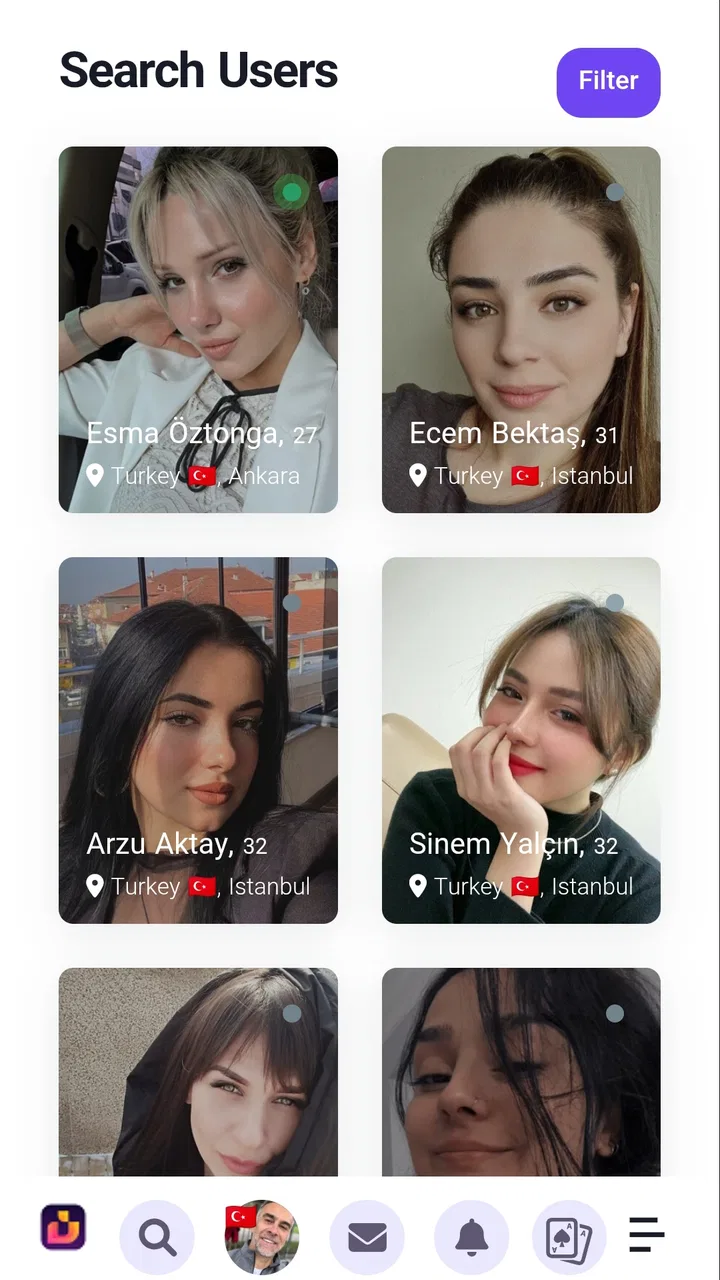
I approached نزدیکا as a social app for people who want to register and sign in to the newer version of the service without making the process feel more complicated than it needs to be. Its store summary is written in Persian, so the app is clearly aimed at Persian-speaking users, and that matters: the usefulness of a social platform often depends as much on the people and language around it as on the interface itself. My overall impression is that it is worth considering if you want a focused way into this community, but it is not the kind of app I would recommend blindly to every phone owner.
The app is free, belongs to the Social category, and is published by Menchu Castañeto Siring. It has reached more than 500 thousand installs and holds a 3.8 average from roughly 2.3 thousand ratings, with 77 written reviews. Those numbers suggest a real user base rather than an empty experiment, while the rating also tells me to keep expectations practical: people are using it, but the experience is not universally smooth. It is marked Mature 17+, so I would not treat it as a general-purpose social app for younger users.
What using نزدیکا feels like in everyday situations
The clearest use case is simple registration and access. If someone has been told to join the newer نزدیکا service and wants a direct starting point on Android, this app appears designed around that first step. I would use it when I wanted to get into the service quickly, check whether the community was relevant to me, and then decide whether it deserved a regular place on my phone.
You May Also Like

 Pandora - Music & Podcasts
Pandora’s Music Is Easy to Start, but Harder to Recover
Pandora’s strength is its low-effort path from a seed to a station. Its weak spot is how much confidence it asks you to place in connection, setup, and quiet recovery.

 8 Ball Pool
 Is Built on Rivalries, Rematches, and Routine
A close look at the rivalries, rematches, shared routines, and unanswered safety questions that turn a quick pool match into a persistent mobile community.

 Samsung Music
’s Quiet Strength Is Playing What You Already Own
Its reach comes less from spectacle than from dependable access to a personal library. That simplicity is both the app’s strongest retention engine and its ceiling.

 AccuWeather: Weather Radar
AccuWeather Review: A Quick, Clear Forecast for Everyday Decisions
For everyday plans, the best forecast is the one you can understand quickly. AccuWeather makes rain timing, radar, and local conditions easy to act on, with a few trade-offs.

 Hill Climb Racing
Why Hill Climb Racing Still Turns Crashes Into One More Run
A tiny car, a bumpy hill and one more upgrade: Hill Climb Racing keeps resurfacing because its simple chaos makes every near-miss feel personal.

 AliExpress - Shopping App
AliExpress Makes Global Shopping Feel Personal, but Shoppers Bear the Risk
AliExpress turns a global marketplace into a pocket-sized discovery engine. Its reach is useful, its shopping loop compelling, and its trade-offs easy to miss.
More From Our News Desk
View All News


That distinction is important because a sign-in-focused social app has a different job from a full messaging, photo-sharing, or community platform. I would not judge it by the same standard as a mature social network with years of accumulated tools. Instead, I would ask whether it gets me through the entry point clearly and whether the surrounding service gives me a reason to return. For a new user, the first few minutes matter more than a long feature list: readable prompts, predictable steps, and a clear path after registration are the practical tests.
In a realistic situation, imagine receiving a recommendation from a Persian-speaking friend who says that the newer نزدیکا experience is where their group is moving. I would install the app, complete the sign-in process, and avoid rushing through any screen that asks for personal details. After entering, I would spend a short session checking whether the people, conversations, or local activity match what I actually wanted. That workflow prevents a common mistake: assuming that a large install count automatically means the app will be useful for your particular circle.
My first useful tip is to treat registration as a checkpoint rather than the finish line. Before investing time in building a profile or returning every day, I would confirm that the service has the kind of Persian-language community I am looking for. A social app can be technically easy to enter and still be a poor fit if your friends are elsewhere. نزدیکا makes the most sense when access to its specific user community is the reason you are installing it.
Speed expectations during normal use
I would expect the opening and sign-in flow to feel lighter than a large social platform packed with media, timelines, and background activity. That is an expectation, not a measured promise, because the available product information does not establish loading times or network performance. Still, an app centered on entering a newer service should be evaluated first on how quickly it gets out of the way and lets the user continue.
For a quick check during a break, that kind of focused design can be an advantage. I would rather see a short, understandable path than spend time navigating unrelated sections before reaching the account area. On the other hand, speed can change sharply with a weak connection, busy servers, or a phone that is already under pressure. I would not mistake a fast first launch for proof that every part of the social experience will remain equally responsive.
There is also a practical difference between perceived speed and actual speed. Clear screens can make an app feel efficient even when a request is waiting on the network, while unexplained pauses make a brief delay feel like a failure. When using نزدیکا, I would watch for whether the app gives me a visible indication that a sign-in action is still being processed. If a screen appears unchanged, I would avoid repeatedly tapping the same control, since duplicate attempts can create confusion about whether the account action happened.
A second tip is to test the app in the place where you genuinely plan to use it. If you expect to sign in while commuting, at work, or on a home connection shared by several people, a single smooth session on a strong network does not tell the whole story. I would perform the initial setup on a stable connection, then try one later session under ordinary conditions. That gives a more honest sense of whether the app fits my routine without inventing a performance guarantee.
What happens when use becomes heavier
Social apps become more demanding when they move beyond a simple entry screen. Repeated account checks, switching between sections, loading community content, and keeping a session active can place more pressure on both the connection and the device. With نزدیکا, I would pay attention to the transition from registration into regular use, because that is where a lightweight first impression may or may not hold up.
I would also be careful with older or modest phones. The minimum operating-system requirement is Android 7.0, which makes the app accessible to a broad range of Android devices, but operating-system compatibility alone does not tell me how comfortable the app will feel on every handset. A phone can support an app and still struggle when storage is nearly full, several apps are open, or the battery-saving mode is restricting background activity.
My third practical insight is to separate app problems from account or connection problems. If a sign-in attempt stalls, I would first check the connection and whether another app can reach the internet. If the rest of the phone works normally but نزدیکا repeatedly returns to the same screen, I would close and reopen it before trying several more submissions. This simple sequence reduces the risk of creating multiple confusing attempts and makes it easier to identify where the friction is coming from.
Heavy use also exposes a trade-off common to social services: convenience often depends on staying connected. If you only need occasional access, that may not bother you. If you expect uninterrupted activity throughout the day, I would be more cautious and watch how the app behaves after long sessions. I would not install it on a device with very little free space unless the service is important enough to justify monitoring storage and clearing unrelated clutter first.
Reliability, recovery, and the moments that test trust
Reliability matters more during account access than during casual browsing. If an app is mainly a doorway into a social service, a failed sign-in can block everything else. My standard would be straightforward recovery: after a temporary interruption, I should be able to reopen the app and understand whether I am still signed in, whether the previous action completed, and what to do next.
I would not assume that every interruption means the account was lost. A social app may simply need a fresh connection or a restart after being suspended in the background. My recovery routine would be to wait briefly, check the network, reopen the app, and then try the action once. If the app returns me to the beginning, I would follow the displayed process rather than repeatedly pressing back or submitting forms without knowing their status.
That approach is especially useful for anyone who shares a phone, changes networks frequently, or relies on an older device. Those situations can make a normal session look unreliable even when the underlying account is fine. I would also keep the app updated when a newer version becomes available through the normal store process, because the current release is version 1.0.0 and early releases can receive important refinements as more people use them.
The rating of 3.8 gives me a balanced signal. It is high enough to show that many users find a workable experience, but not so high that I would ignore possible rough edges. The written review count is much smaller than the rating count, so I would read any available comments for patterns rather than treating one complaint or one compliment as the complete truth. For my own decision, repeated reports about sign-in, crashes, or confusing navigation would matter more than isolated reactions.
One recovery habit I would recommend is documenting the exact point at which a problem occurs without exposing private account information. Noting whether the issue happens before sign-in, immediately after it, or while moving through the service makes troubleshooting more useful. It also helps distinguish a problem with the app’s entry flow from a problem inside the social service itself. That is a small discipline, but it saves time when an app is new or still evolving.
Device limits and who should think twice
نزدیکا is free to install, which removes the financial barrier for someone who wants to test it. The more important limits are suitability, maturity, language, and device condition. The Mature 17+ label means I would keep it away from children and would not install it on a family device without considering who may access it. Adults should still use ordinary judgment when joining any social community, especially during early exploration.
The Android 7.0 minimum is helpful for people using older phones, but I would not interpret it as a guarantee of a light resource footprint. A compatible operating system is only one part of the experience. Available memory, storage, battery health, and connection quality can all affect how stable an app feels. If your phone already closes apps unexpectedly, freezes during account actions, or warns about low storage, I would fix those conditions before blaming نزدیکا for every delay.
I would also skip it if I need a mature, broad social network with a large ecosystem of familiar tools. The usual alternatives may be better for established friend groups, rich media sharing, or dependable cross-platform habits. نزدیکا is more appealing when the newer service itself is the destination. If your contacts are already active somewhere else, moving just because an app is free may create more friction than value.
Conversely, I can see a clear reason to try it if a trusted Persian-speaking group is already using the service. In that case, the app’s focused entry point may be more useful than a crowded alternative filled with features and communities you do not need. The deciding question is not whether it replaces every social app; it is whether it connects you to the particular people and service you care about.
Privacy-minded users should take the setup slowly. I would read each registration screen, avoid entering information that is not needed for my purpose, and review what I am comfortable sharing once inside the service. I would not assume that free access means there is no responsibility on the user’s side. Social participation always deserves a little attention to identity, contacts, and the audience around you.
How it compares with familiar social alternatives
Compared with a large mainstream social network, نزدیکا feels easier to position but harder to recommend universally. A mainstream platform usually wins when your friends, creators, and conversations are already there. It may also offer a more familiar workflow for people who have used it for years. نزدیکا can win when the newer Persian-language service is the specific community you want and you prefer a direct route instead of another enormous feed.
Compared with a messaging app, the comparison is even more dependent on purpose. Messaging tools are usually the obvious choice for private conversations with known contacts. I would choose نزدیکا when I want to enter its broader social environment rather than simply send a message to someone whose number I already have. If all I need is reliable one-to-one communication, a familiar messenger is probably the more efficient choice.
Compared with a browser shortcut or a web-based sign-in, a dedicated app can feel more convenient because it gives the service a place on the phone and may reduce the number of steps needed to return. The trade-off is that an installed app occupies device space and becomes another account entry point to maintain. I would choose the app when I expect repeated access; for a one-time visit, a browser may be enough.
This is where the install figure becomes useful as context rather than proof of quality: more than 500 thousand people have installed it, so the service has meaningful reach, but reach does not guarantee that it contains your friends or preferred conversations. I would ask one or two people I trust whether they are active there before making it my main social destination. That small check is more valuable than choosing based on popularity alone.
My performance verdict after weighing the trade-offs
My verdict is cautiously positive for the right audience. نزدیکا is a sensible free trial for an adult Persian-speaking Android user who specifically wants access to the newer service and has a device running Android 7.0 or later. Its focused purpose should make the initial decision easy: install it if the community is relevant, then judge the real value by the quality of access and the people you find there.
I would not call it the best general social app, and I would not replace an established messenger or social network solely because this one is available at no cost. The 3.8 average points to a usable but imperfect experience, while the early version number encourages realistic expectations about polish and recovery. I would give it a fair test on a stable connection, avoid repeated sign-in attempts during delays, and reassess after a few ordinary sessions rather than after one unusually smooth or frustrating launch.
For me, the strongest reason to recommend it is not raw speed or the size of its install base. It is the possibility that it provides a direct doorway to a community I already want to reach. The main weakness is equally clear: if that community is not active for you, the app has little reason to remain installed. Use نزدیکا when its specific social destination matters; choose a familiar alternative when reliability, established contacts, or a broader set of tools matters more.
Because it carries a Mature 17+ rating, I would make that suitability check before anything else. For an adult who understands the purpose of the service and wants to explore it without paying, the app is worth trying. For a child, a user seeking private messaging only, or someone with no connection to its intended Persian-speaking community, I would recommend looking elsewhere.
FAQs for نزدیکا
01What is نزدیکا and what can I use it for?
نزدیکا is a location-based social and discovery application designed to help users find nearby people, places, services, or local content, depending on the features available in their region. After installation, the app may use your approximate location to personalize what appears around you. It is especially useful for discovering local opportunities and connecting with your surrounding community.
02Does نزدیکا require access to my location and personal information?
Location access is likely an important part of نزدیکا’s experience because nearby recommendations and interactions depend on where you are. You may also be asked to create an account using information such as a phone number, email address, or profile details. Before accepting permissions, review the privacy policy and enable only the access you are comfortable providing. Some functions may be limited without location permission.
03Is نزدیکا free to download and use?
نزدیکا can generally be downloaded without an upfront charge, but availability of free features may depend on the version and region. Some services, promotions, or advanced options could require payment, subscriptions, or in-app purchases. We recommend checking the app’s store listing carefully before downloading, especially the pricing section, renewal terms, and whether any optional purchases are presented during registration.
04Is نزدیکا safe for communicating with nearby users?
As with any location-based social app, users should be careful when communicating with people they do not know. Avoid sharing your home address, financial information, passwords, or private documents, and be cautious about moving conversations to external platforms. Use any available blocking and reporting tools if someone behaves suspiciously. If arranging an in-person meeting, choose a public place and tell someone you trust.
05What should I check before downloading نزدیکا on Android or iPhone?
Before installing نزدیکا, confirm that your device runs a supported version of Android or iOS and has enough free storage. Check the developer name, recent update date, user reviews, privacy disclosures, and requested permissions in the official app store. It is also worth verifying whether the application is available in your country and whether its main features require an account, location services, or an internet connection.
Pros
- Quickly discover nearby services
- shops
- and useful local places.
- Location-based results make searches more relevant to your area.
- Convenient for comparing nearby options before visiting.
- Can help uncover lesser-known businesses close to you.
- Useful for planning errands and saving travel time.
Cons
- Results may vary significantly depending on your city or region.
- Location access can raise privacy concerns for some users.
- Business information may occasionally be outdated or incomplete.
- Some features may require a stable internet connection.
- The app may offer limited value in areas with few listed places.

نزدیکا
Gallery